
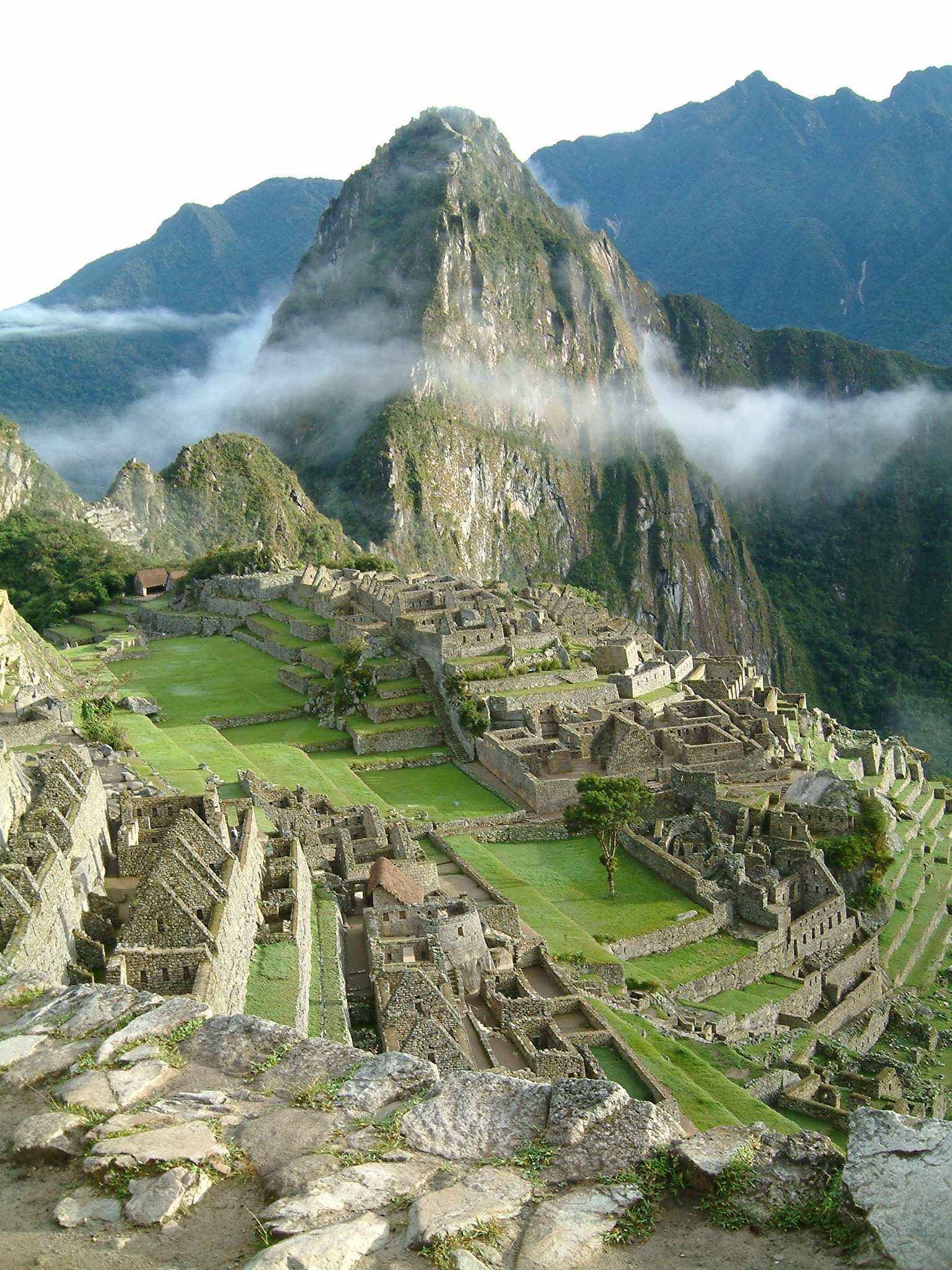
1. Introduction: Why Machu Picchu Is a Top Destination for Americans

Machu Picchu: Ajis, By Wasif Malik – Machu Picchu Lima Cusco Peru 003, CC0, https://commons.wikimedia.org/w/index.php?curid=77428913
For American travelers seeking history, culture, and unforgettable landscapes, Machu Picchu consistently ranks among the world’s most iconic destinations. This UNESCO World Heritage Site, perched high in the Andes Mountains of Peru, combines archaeological wonder with dramatic natural beauty—an irresistible mix for travelers from the United States who value meaningful, once-in-a-lifetime experiences.
Beyond its visual impact, Machu Picchu appeals to Americans because it is well organized for international visitors, relatively safe, and supported by strong tourism infrastructure. English is widely spoken in hotels and tour services, flights from the USA are frequent, and Peru has a long track record of welcoming U.S. travelers. Whether you are a cultural enthusiast, an adventure seeker, or a couple planning a bucket-list journey, visiting Machu Picchu from the USA is both achievable and deeply rewarding.
This guide explains how Americans can visit Machu Picchu, covering entry requirements, travel logistics, ticketing, experiences, accommodation, and practical tips—so you can plan your Peru trip with confidence.
2. Flights & Connections: USA → Lima → Cusco
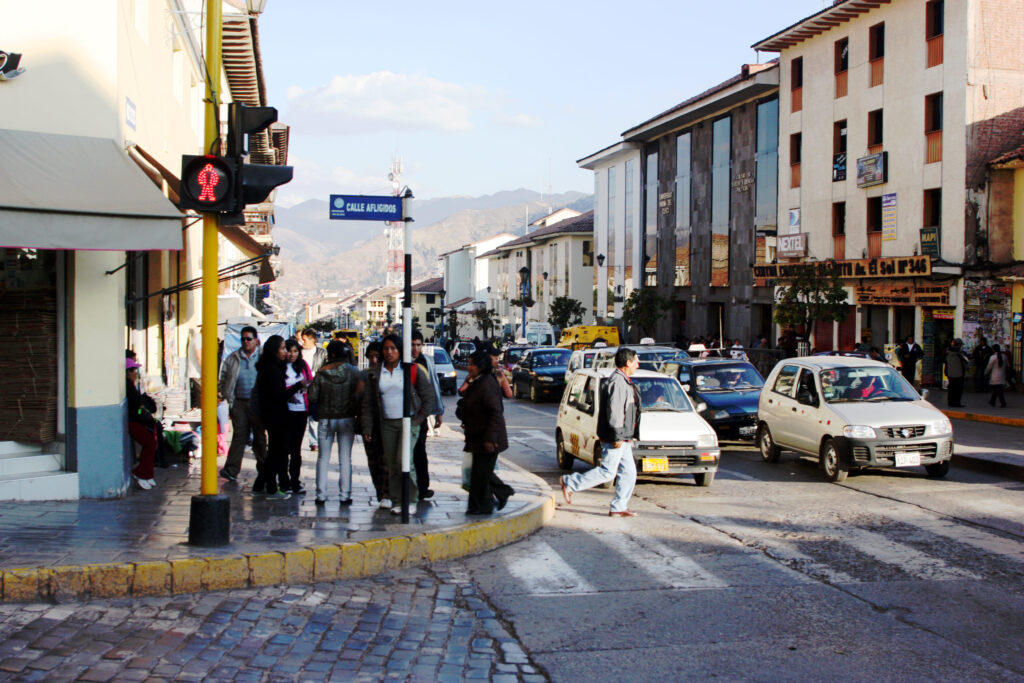
Flighs: Cusco, by Bruce Tuten – https://www.flickr.com/photos/savannahgrandfather/6257787985/, CC BY 2.0, https://commons.wikimedia.org/w/index.php?curid=26861318
Most Peru trips for Americans begin with an international flight to Lima, followed by a domestic connection to Cusco.
Major U.S. gateways such as Los Angeles, Miami, New York, Atlanta, Houston, and Dallas offer direct or one-stop flights to Lima’s Jorge Chávez International Airport (LIM). Flight time from the U.S. typically ranges from 7 to 9 hours, depending on your departure city.
From Lima, travelers take a domestic flight to Cusco (CUZ). This segment lasts approximately 1 hour and 20 minutes and is operated frequently throughout the day.
Popular airlines serving these routes include American Airlines, LATAM, United, Delta, and JetBlue for international legs, with LATAM, Sky Airline, and JetSmart dominating domestic flights.
A recommended planning tip for U.S. travelers is to avoid tight connections in Lima. Leaving at least 3 hours between international arrival and domestic departure helps account for immigration procedures and luggage re-check.
3. Entry Tickets & Permits: What Americans Need to Know
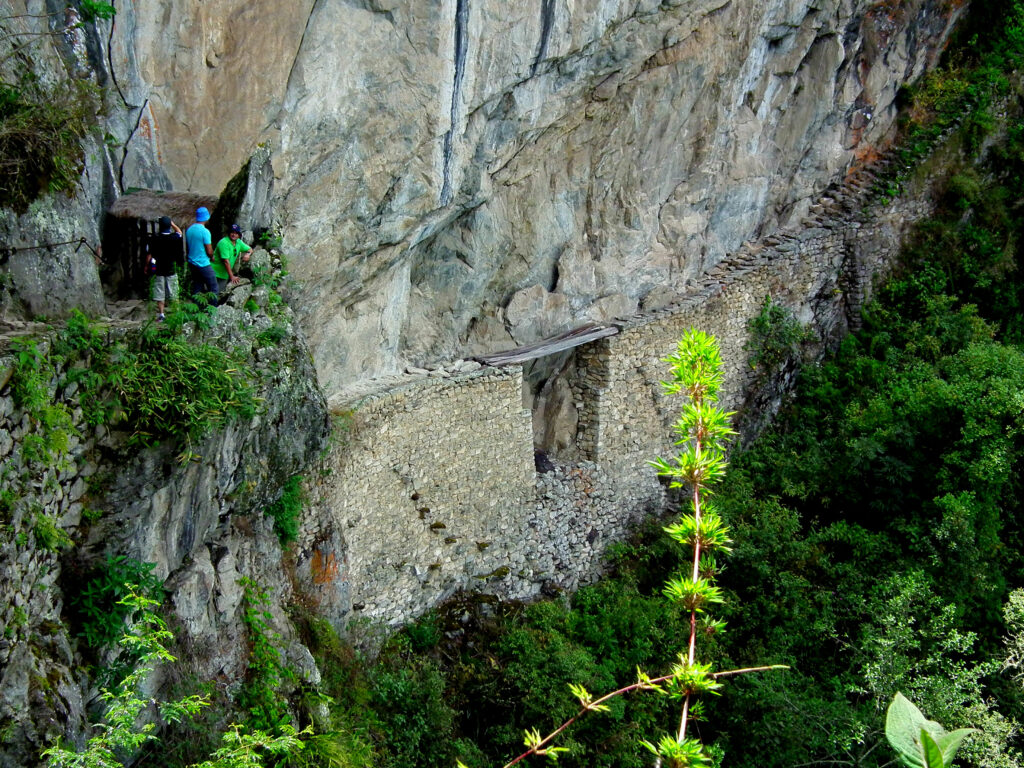
Entry Tickets: Inca bridge Machu Picchu Cusco Peru, by Wasif Malik – https://www.flickr.com/photos/wasifmalik/44612805045/, CC0, https://commons.wikimedia.org/w/index.php?curid=169967397
Access to Machu Picchu is strictly regulated by the Peruvian government. All visitors must purchase an official entrance ticket in advance, as daily visitor numbers are capped.
There are several ticket types, including general entrance and combined tickets with additional routes such as Huayna Picchu or Machu Picchu Mountain. Each offers different perspectives and physical demands.
For Americans planning to visit during high season (May–September), tickets should be reserved at least 2–3 months in advance. Peak dates, especially summer and U.S. holiday periods, can sell out quickly.
Tickets are issued by Peru’s Ministry of Culture through its official platform or authorized operators. Your passport details must match exactly, as tickets are non-transferable and checked against your ID at entry.
Hiring a licensed local guide is not mandatory but highly recommended. Guides add historical context, help manage time slots, and enhance the overall experience—particularly for first-time visitors.
4. Experience Options: Train vs. Trekking
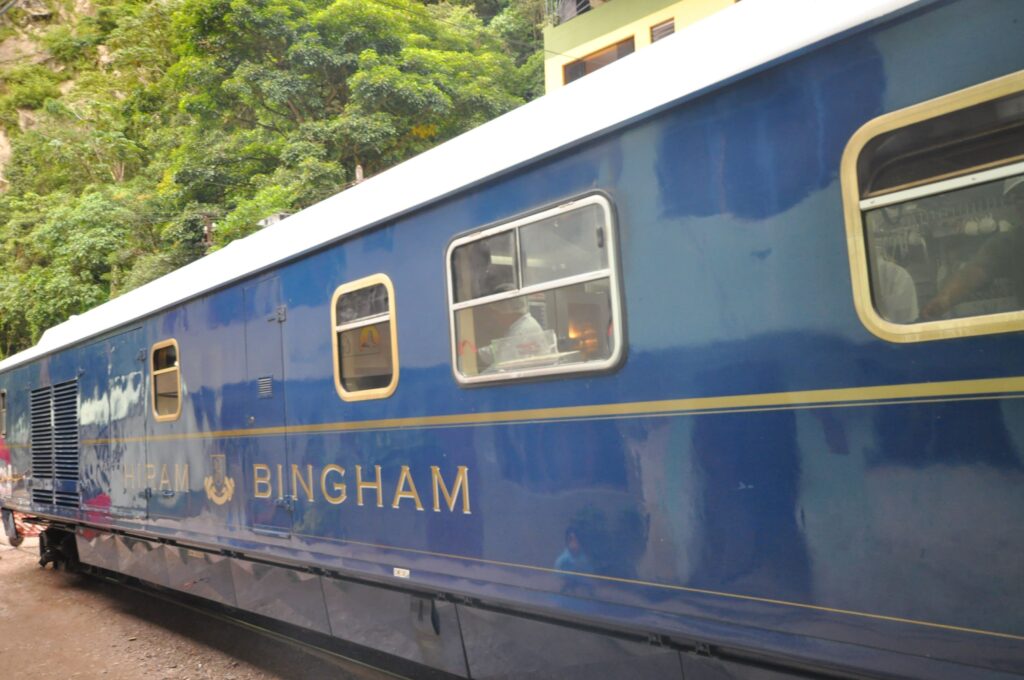
Experience Options: Hiram Bingham Perurail – linea Cusco-Machu Picchu , By Jorge Láscar from Australia – The luxurious Hiram Bingham train, Archivo:Hiram Bingham Perurail – linea Cusco-Machu Picchu – 2009-01-06 – Jorge Lascar.jpg., CC BY 2.0, https://commons.wikimedia.org/w/index.php?curid=27717236
Americans visiting Machu Picchu can choose between comfortable train journeys or multi-day trekking adventures, depending on fitness level, time, and budget.
The train option is the most popular. Travelers go from Cusco or the Sacred Valley to Aguas Calientes, the town at the base of Machu Picchu. The journey offers scenic views and requires minimal physical effort. Total travel time from Cusco usually ranges from 4 to 5 hours.
Trekking options, such as the Classic Inca Trail, Salkantay Trek, or Lares Trek, provide immersive experiences for adventure-oriented travelers. These treks last between 2 and 5 days, include camping or lodge stays, and require advance permits. The Inca Trail, in particular, must be booked months ahead.
Estimated costs vary widely. Train-based visits typically range from USD 300 to 600 per person, while multi-day treks can cost USD 700 to 1,200, depending on service level.
5. Practical Advice for Americans: Visas, Insurance & Health
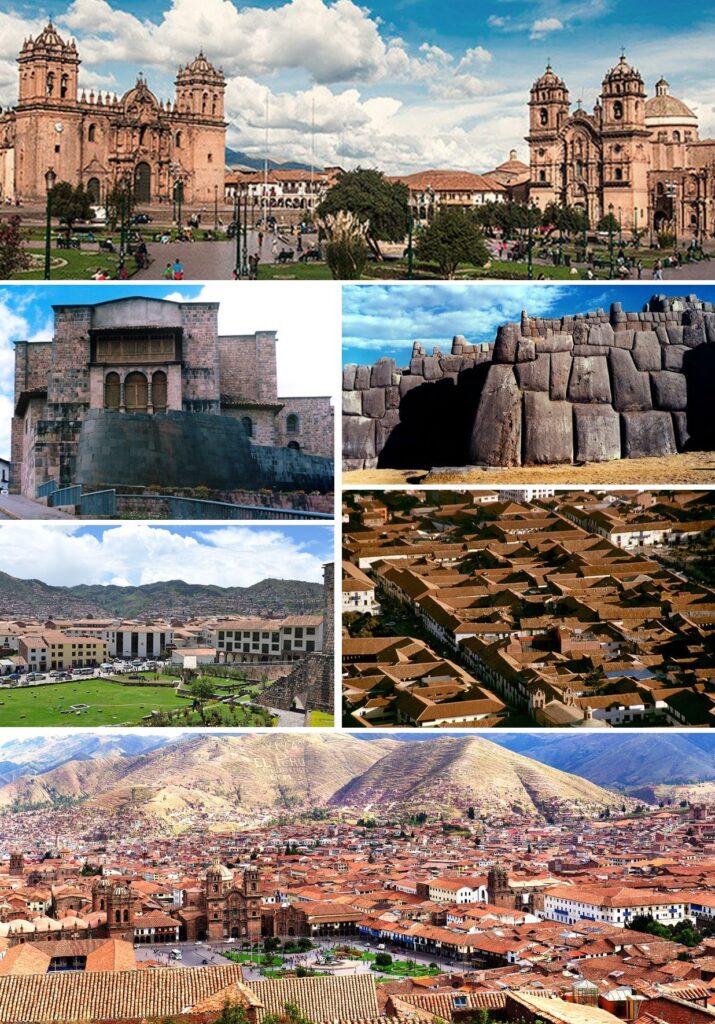
Cusco City, By ZiveriusHåkan Svensson (Xauxa)XauxaJorge LáscarMartin St-Amant (S23678) – File:Plaza de Armas de Cusco, Perú.pngFile:Cusco Coricancha Inti-Huasi main view.jpgFile:Sacsahuaman wall3.jpgFile:Lascar View of Cuzco from The Coricancha (Cuzco) (4578196276).jpgFile:Cusco-c02.jpgFile:Cuzco Décembre 2007 – Panorama 1.jpg, CC BY-SA 4.0, https://commons.wikimedia.org/w/index.php?curid=75989309
U.S. passport holders do not need a visa for tourist visits to Peru of up to 90 days. Your passport should be valid for at least six months beyond your entry date.
Travel insurance is strongly advised. Coverage should include medical care, trip interruption, and emergency evacuation—especially important when visiting high-altitude regions like Cusco and Machu Picchu.
Altitude is a key consideration for Americans unfamiliar with high elevations. Cusco sits at over 11,000 feet above sea level, which may cause mild altitude sickness. Spending at least one day acclimatizing, staying hydrated, and avoiding alcohol initially can make a significant difference.
Basic health precautions, such as routine vaccinations and bottled water consumption, are usually sufficient. Peru’s major tourist areas are well prepared to handle international visitors’ needs.
6. Hotels & Accommodation for American Travelers
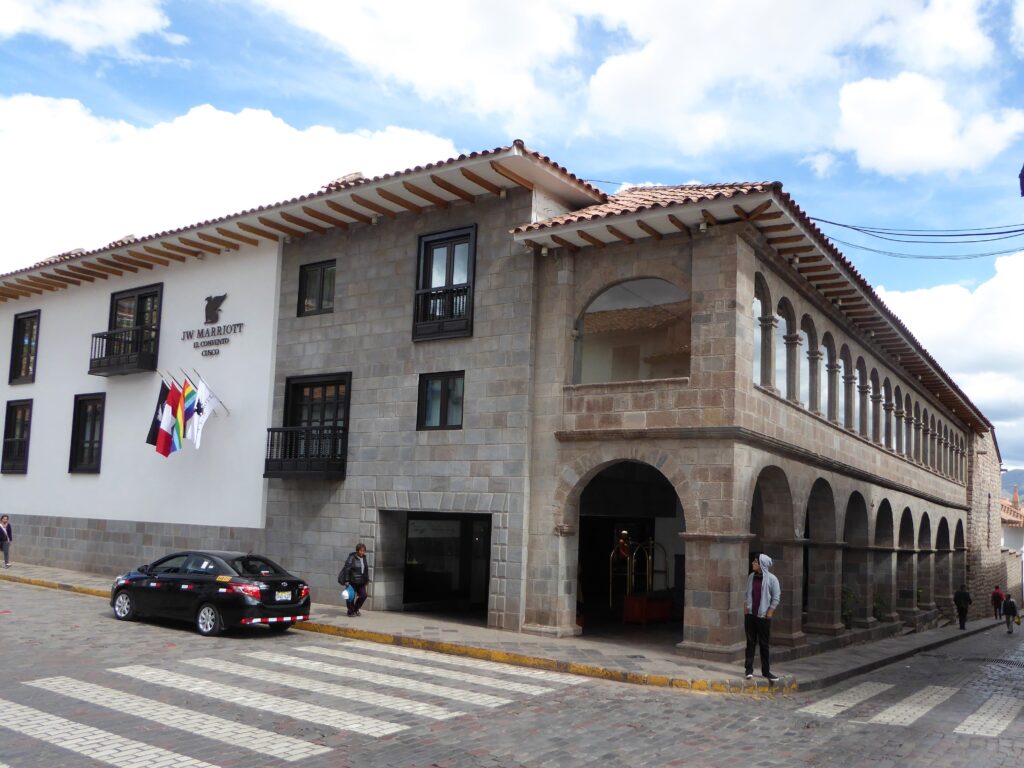
JW Marriott El Convento Cusco exterior.
Photo by Arabsalam, licensed under CC BY-SA 4.0 (https://creativecommons.org/licenses/by-sa/4.0), via Wikimedia Commons.*
Accommodation options near Machu Picchu cater well to American expectations, offering comfort, safety, and service quality.
Luxury travelers may choose high-end hotels in Cusco or the Sacred Valley that emphasize wellness, fine dining, and personalized service. These properties often include oxygen-enriched rooms and spa treatments designed for altitude recovery.
Mid-range hotels provide excellent value, combining modern amenities with local character. Many American travelers find these options ideal for balancing comfort and budget.
Budget accommodations are also widely available, particularly in Aguas Calientes, and are suitable for younger travelers or those prioritizing experiences over luxury.
Across all categories, English-speaking staff and familiarity with U.S. traveler preferences are common, making the stay smooth and enjoyable.
7. What to Pack: Essential Checklist
Packing smartly enhances your Machu Picchu experience. Weather can change quickly, and walking conditions vary.
Key items include layered clothing, comfortable walking shoes, sun protection, rain gear, and personal medications. A small daypack is ideal for carrying essentials during site visits.
A printed copy of your passport and Machu Picchu ticket is recommended, along with digital backups stored securely.
8. Frequently Asked Questions (FAQ)
Many Americans ask whether Machu Picchu is safe. The answer is yes—Peru’s main tourist circuits are well monitored, and Machu Picchu is considered very safe for international visitors.
Another common question concerns the best time to visit. The dry season from May to September offers clearer skies, while the shoulder seasons provide fewer crowds and greener landscapes.
Travelers also wonder if Machu Picchu is suitable for older visitors. With proper planning and choosing the train option, visitors of all ages can enjoy the site comfortably.
9. Conclusion: Start Your Machu Picchu Journey with Confidence
Visiting Machu Picchu from the USA is not just a trip—it is an encounter with one of humanity’s greatest achievements. With proper planning, clear logistics, and realistic expectations, American travelers can enjoy a seamless and deeply enriching journey through Peru.
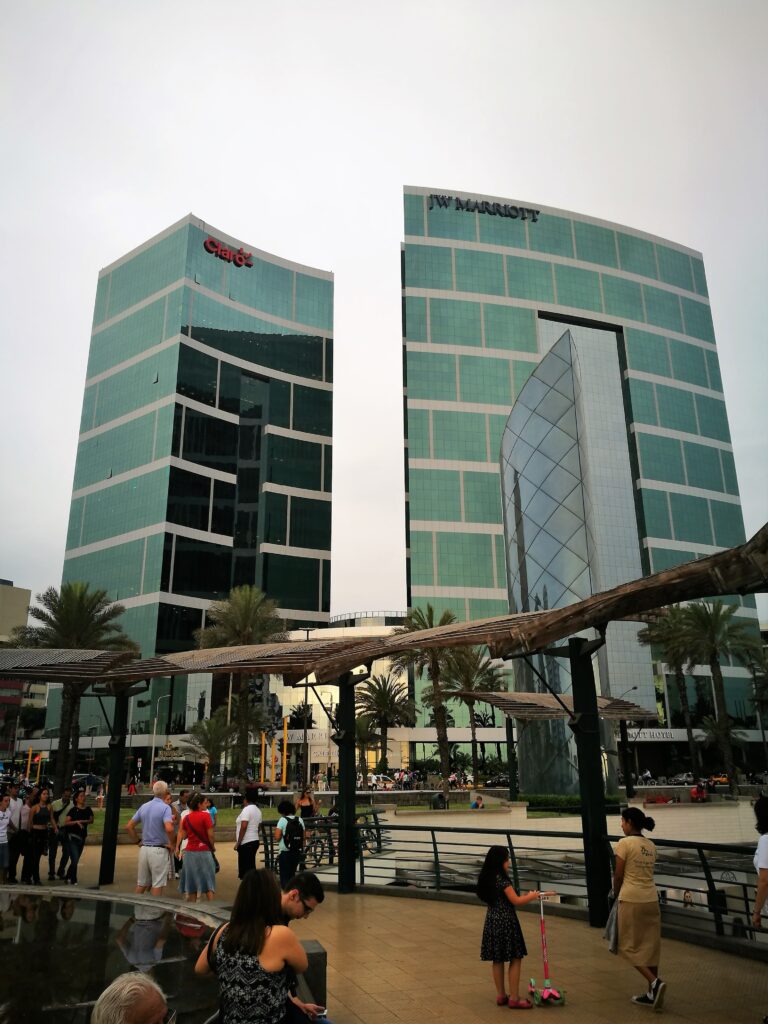
Hotel JW Marriott, Miraflores, Lima , By Pitxiquin – Own work, CC BY-SA 4.0, https://commons.wikimedia.org/w/index.php?curid=59440498
La imagen destacada del presente artículo corresponde a Machu Picchu Sunrise, Por Allard Schmidt (The Netherlands) – Trabajo propio, Dominio público, https://commons.wikimedia.org/w/index.php?curid=4746336